VIACTIVEnterprise platforms
An insurance portal for business clients, connected to their CRM.
VIACTIV Krankenkasse wanted a portal for its business and bulk-client relationships that fits into the CRM systems those clients already use.
- Client
- VIACTIV Krankenkasse
- Platforms
- Web portal, Admin dashboard
Overview
VIACTIV Krankenkasse wanted a portal for its business and bulk-client relationships that fits into the CRM systems those clients already use.
The starting point
A health insurer's corporate clients look after many insured employees at once, and keeping that data aligned between the insurer and each client's own systems meant a lot of manual handling. VIACTIV asked for a portal those clients could work in directly, connected to the CRM systems they already run.
What we built
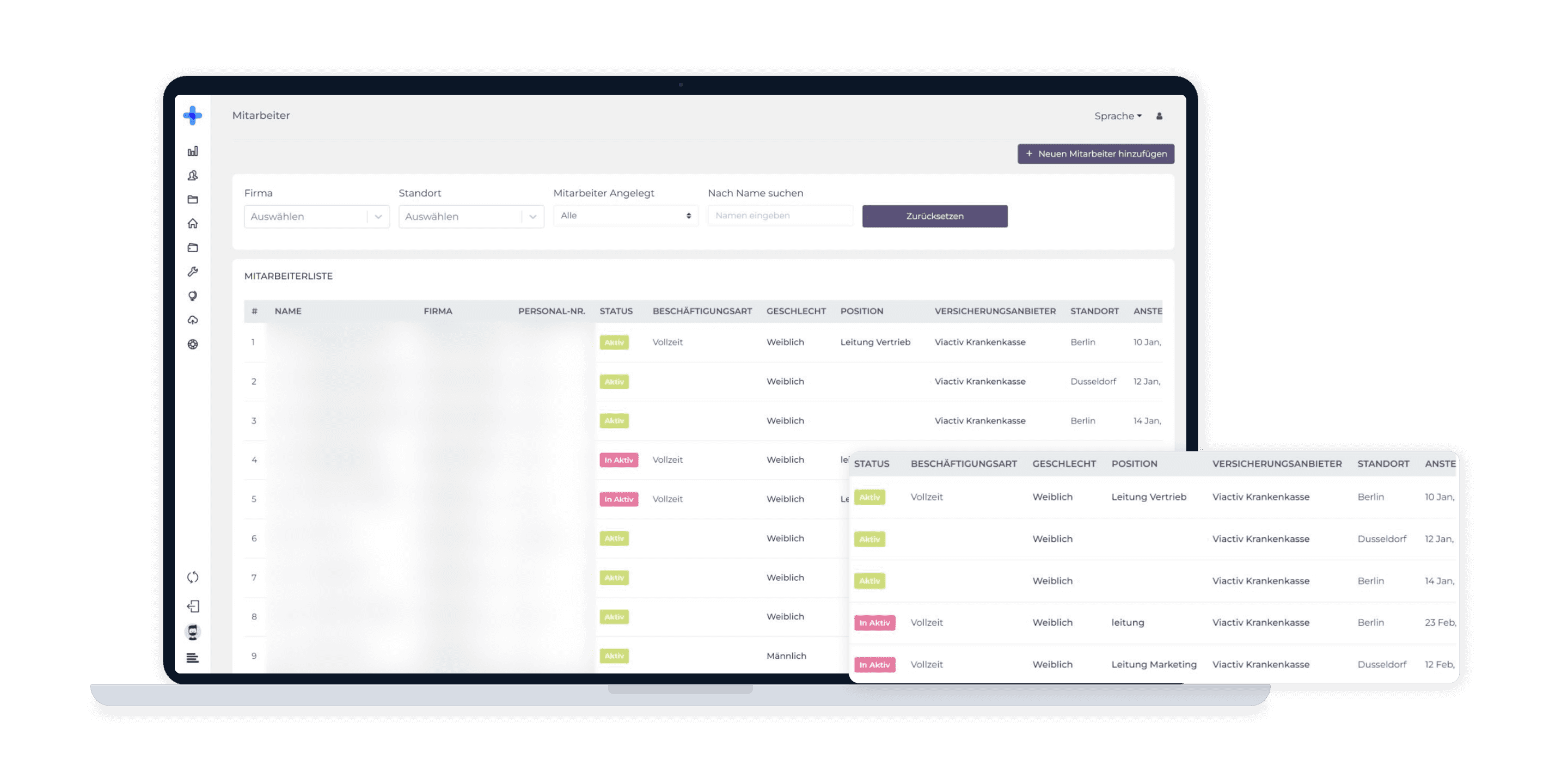
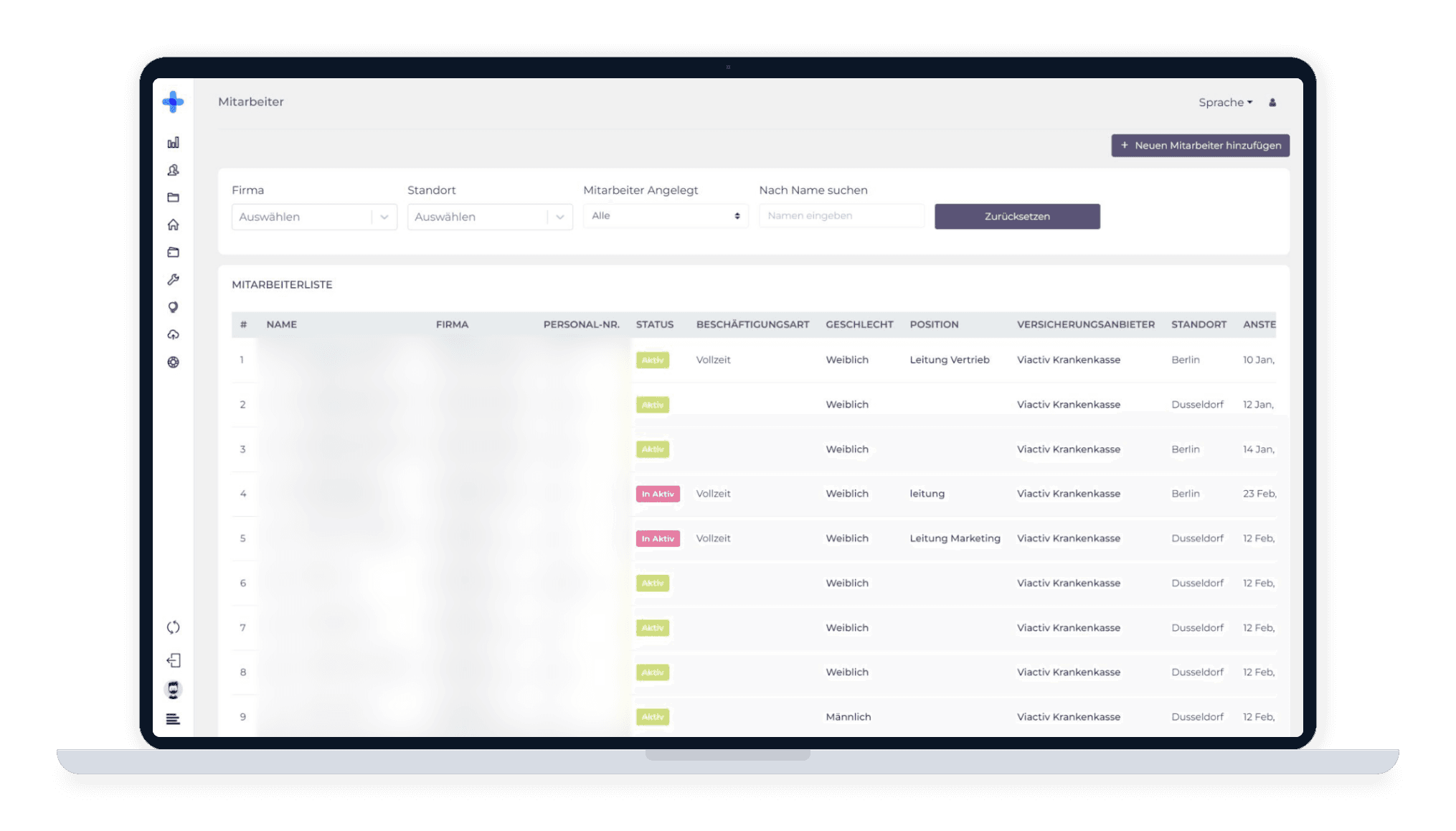
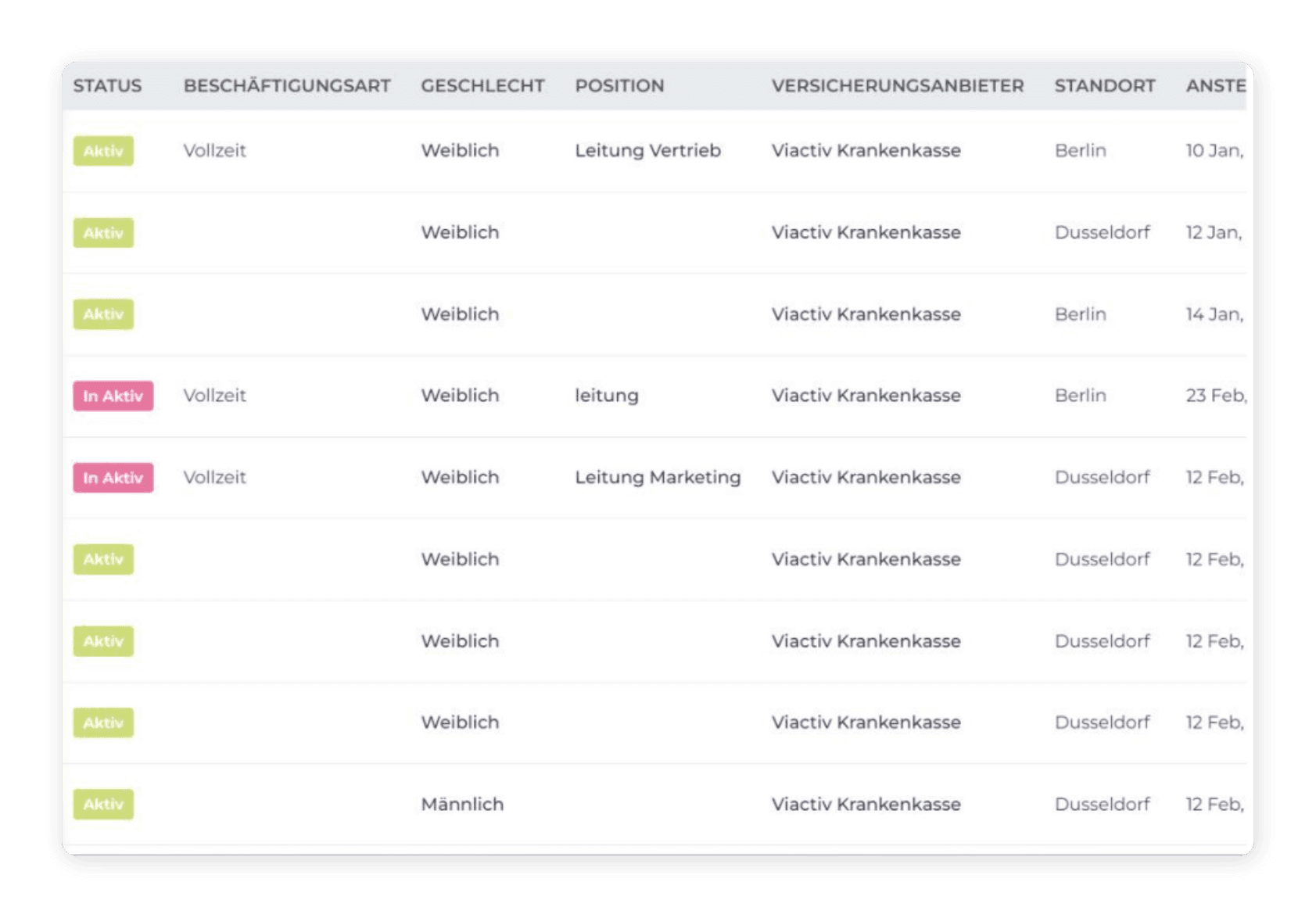
A portal with its own access for each corporate client, and an admin view for managing insured employees across companies and locations, with each member's status, employment type and insurer. Underneath, an integration layer exchanges data with the clients' CRM systems in a structured way and keeps both sides in sync.
How we worked
We worked side by side with the team of VIACTIV's partner company. The access model came first: the portal's users, their permissions and the data each client exchanges. The portal followed, then the CRM integration layer, then access management, with every decision kept in writing so both teams built against the same answer.
The technical choices
Structured data exchange replaces manual handling: the integration layer keeps the portal and each client's CRM in sync, so a change made on one side reaches the other without being copied across by hand. Client and admin permissions are kept separate.
Where it is now
In VIACTIV's words, the portal came together without the usual friction between vendors, and their people are glad to work in it.
How it was built
VIACTIV, phase by phase.
What each stage of the project delivered, in the order we built it.
Phase 1
Scope and access model
The portal's users, their permissions and the data each client exchanges.
Phase 2
Corporate client portal
Portal access for corporate and bulk clients.
Phase 3
CRM integration layer
Structured data exchange, and an integration layer that keeps the portal and the clients' CRM systems in sync.
Phase 4
Access management
Separate permissions for clients and for administrators.
What we built
The product, feature by feature.
Portal
Corporate client access
Business and bulk clients work in their own portal.
Access management
Separate permissions for clients and administrators.
Integration
CRM connectivity
Connected to the CRM systems clients already use, to reduce manual data handling.
Structured data exchange
Data moves between the portal and each client in an agreed structure.
Synchronisation layer
An integration layer that keeps both sides in sync.
Inside the product
VIACTIV, on screen.
Testimonial
In their words.

Bespoke IT worked side by side with our partner company's team and the portal came together without the usual friction between vendors. They asked the right questions early, kept every decision in writing and delivered a portal our people are glad to work in.
Alexander
VIACTIV Krankenkasse
Insurance portal, built together with VIACTIV's partner team
Industries
The same problem, industry by industry.
The industry this project sits in comes first. Pick another to see how the problem shows up there, and what we build for it.
Finance and insurance
The problem
Applications and claims arrive as documents and get checked by hand against rules everyone knows by heart. Every audit means a week of collecting evidence.
What we build
Document intake, reconciliations and reporting that record every step for the auditor.
Usually connects to
- Salesforce
- Microsoft 365
- SharePoint
- DATEV
- Jira
- or your own custom backend



An audit trail written while the work happens.

Healthcare and clinics
The problem
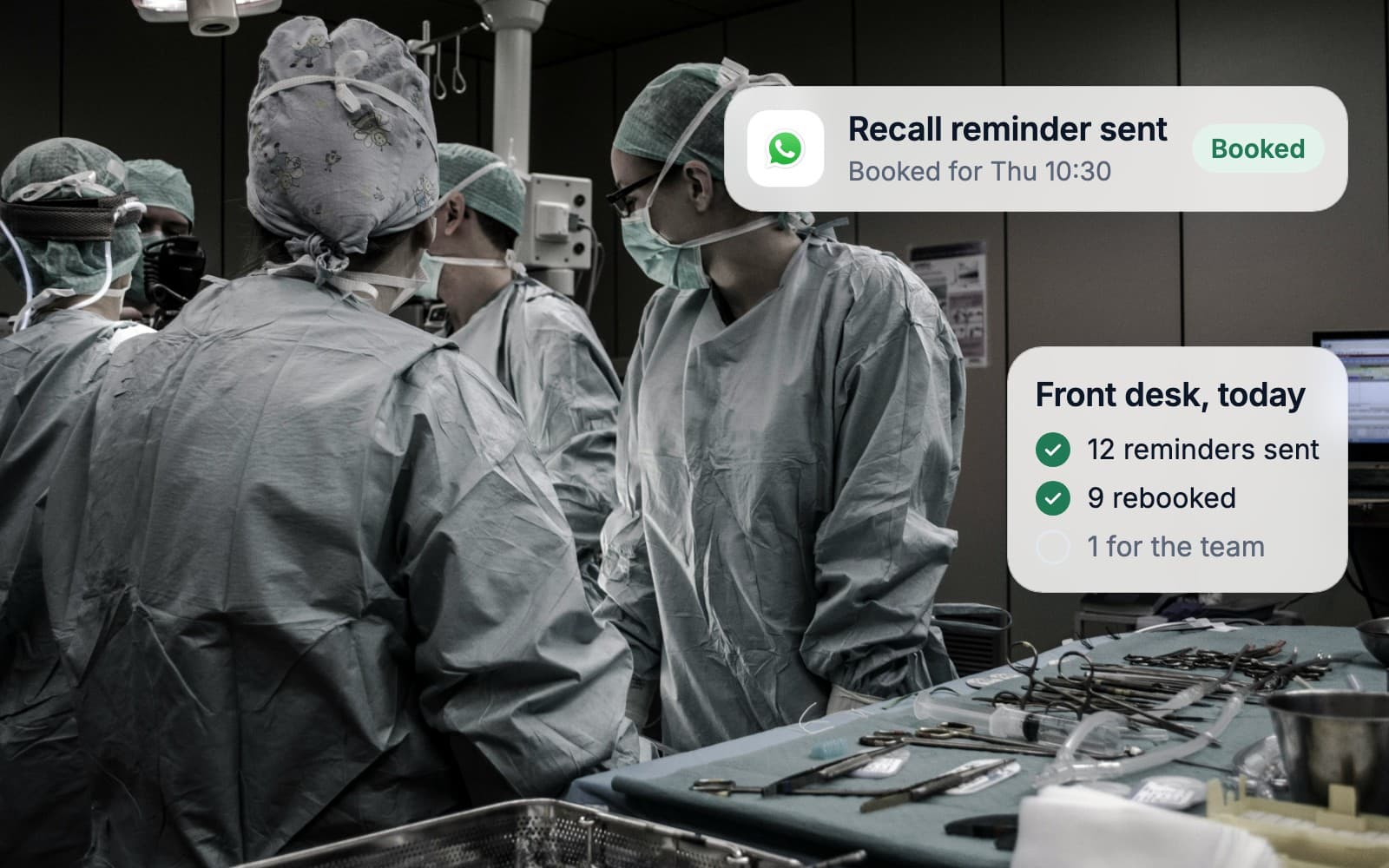
The front desk spends the morning on reminder calls and rebookings. Patient records sit in one system, invoices in another, and nobody sees which patients have quietly stopped coming back.
What we build
Reminders timed to treatment intervals, invoices that post to accounting, and a weekly list of patients due back.
Usually connects to
- DATEV
- Microsoft 365
- Google Workspace
- HubSpot
- or your own custom backend


Every patient, every site, one view.
Professional services
The problem
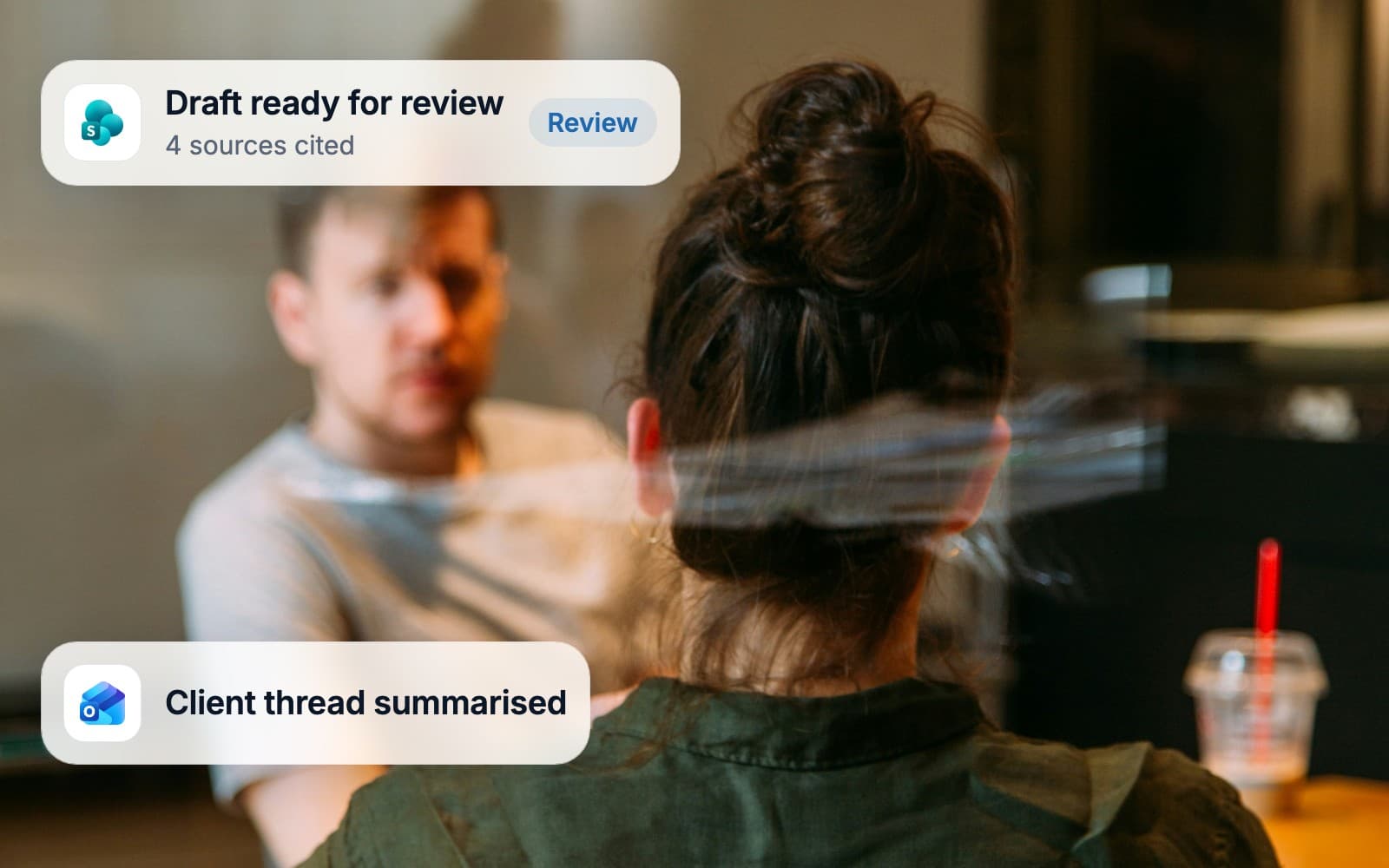
Senior people spend their evenings on time sheets, engagement letters and status reports. Knowledge lives in inboxes, so every new case starts from a blank page.
What we build
Time entries taken from calendars and mail, invoices prepared in your accounting system, client reports assembled on schedule.
Usually connects to
- Microsoft 365
- Outlook
- SharePoint
- DATEV
- Confluence
- or your own custom backend


The firm's memory, finally searchable.
Manufacturing
The problem
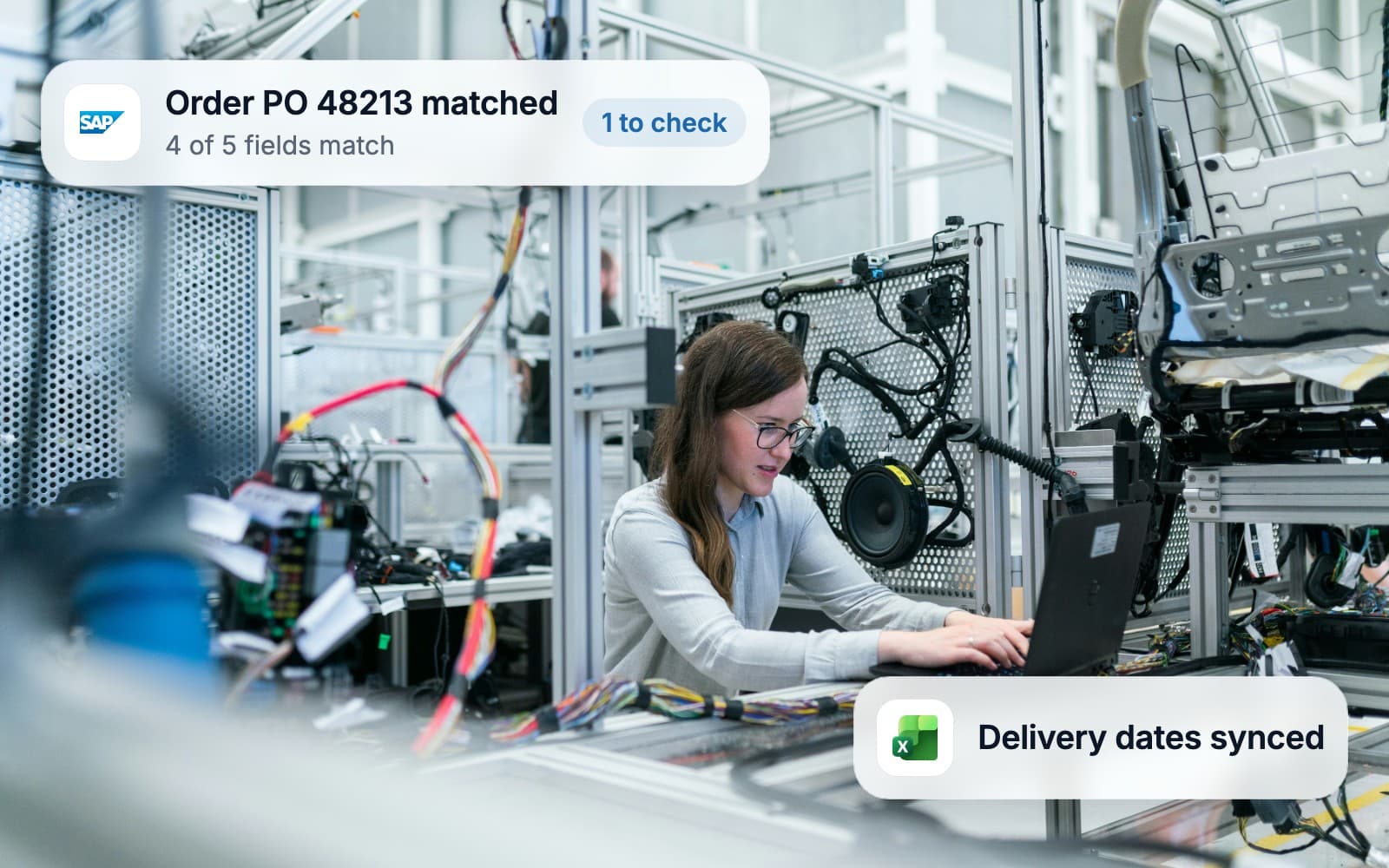
Orders arrive as PDFs and emails and get typed into SAP by hand. Planning runs on a spreadsheet that one person understands.
What we build
Purchase orders matched to invoices, planning data taken from the shop floor, supplier messages filed against the right order.
Usually connects to
- SAP
- Microsoft 365
- Microsoft Teams
- Excel
- Dynamics 365
- or your own custom backend


Orders that reach SAP without a keyboard.
Retail and e-commerce
The problem
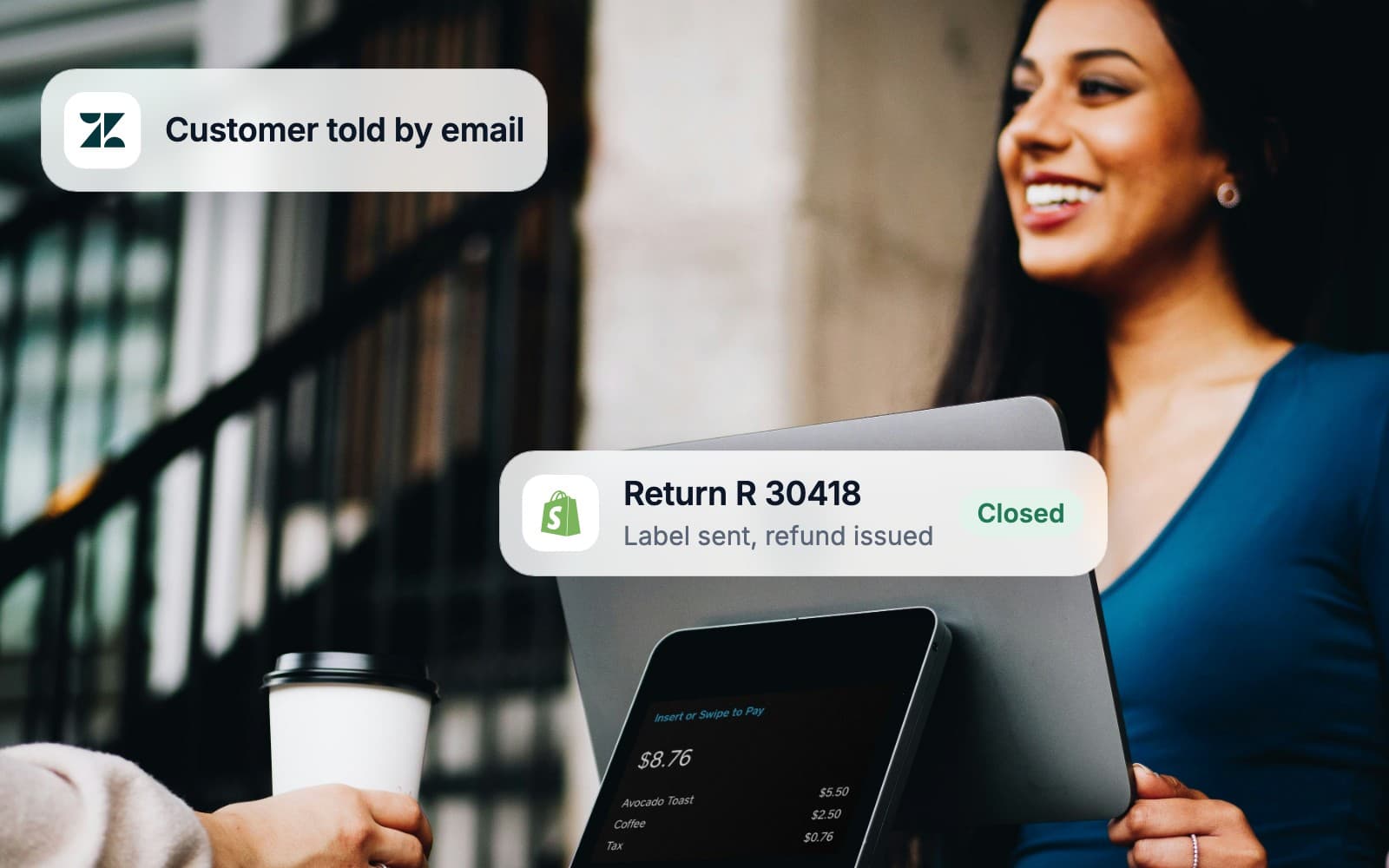
Customer service answers the same twenty questions all day. Returns are processed by hand, and by Friday the shop, the stock and the books disagree.
What we build
Returns processed end to end, stock kept in sync across channels, daily sales posted to accounting.
Usually connects to
- Zendesk
- HubSpot
- Google Workspace
- DATEV
- Slack
- or your own custom backend


Shop, stock and books that agree on Friday.
Logistics and travel
The problem
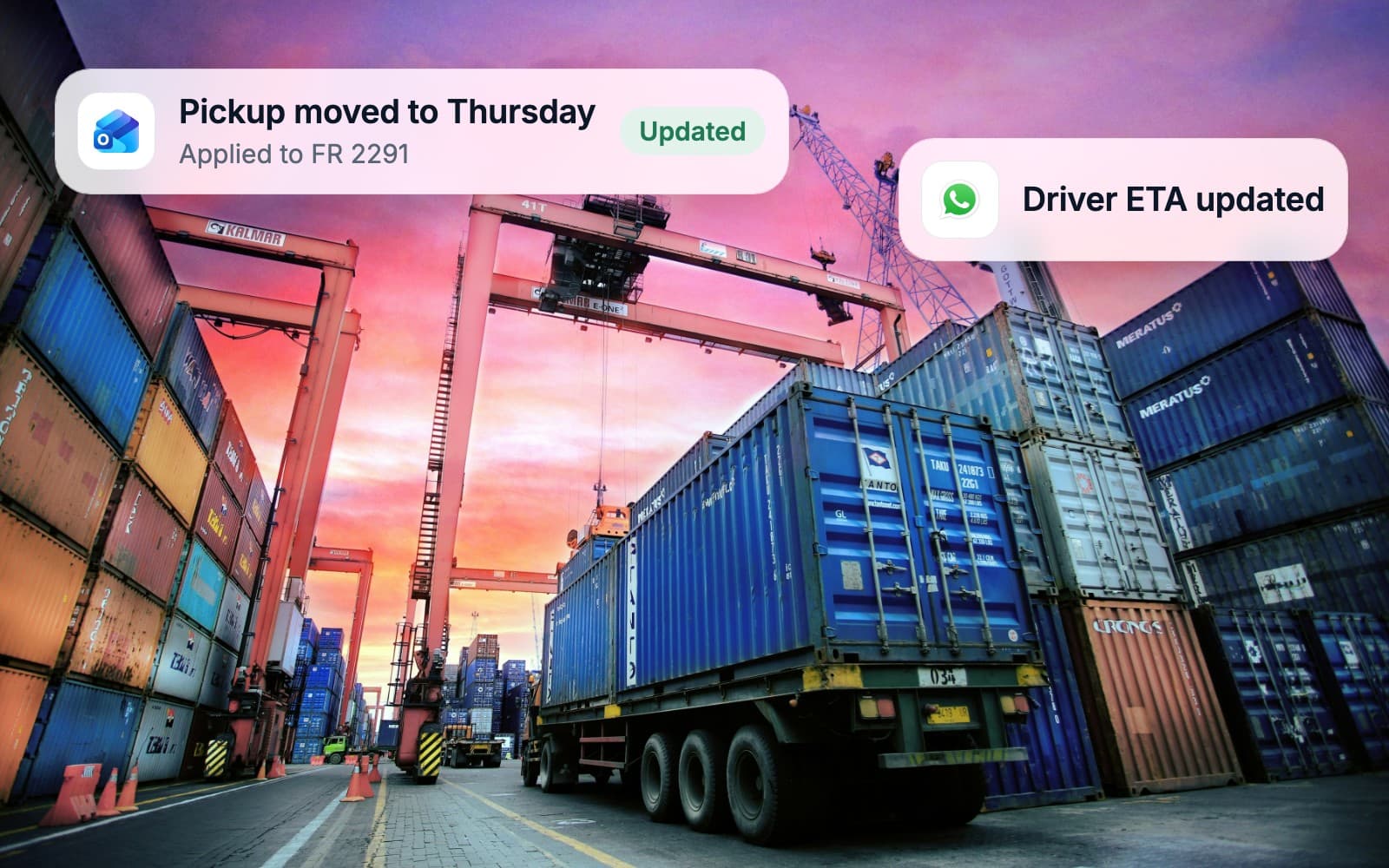
Bookings, changes and documents arrive by email at all hours. The team types them into three systems, and customers call to ask where things stand.
What we build
Booking confirmations read into your systems, documents generated and filed, status updates sent on their own.
Usually connects to
- Microsoft 365
- Outlook
- SAP
- Salesforce
- Slack
- or your own custom backend
The customer knows before they ask.
Software and SaaS
The problem
The roadmap is full, support tickets keep pulling engineers off it, and the internal tools are scripts nobody owns.
What we build
Onboarding, billing and CRM kept in sync, with the scripts replaced by something your team can maintain.
Usually connects to
- Jira
- Confluence
- Slack
- HubSpot
- Notion
- Zendesk
- or your own custom backend

Engineers back on the roadmap.
More projects.
View all projects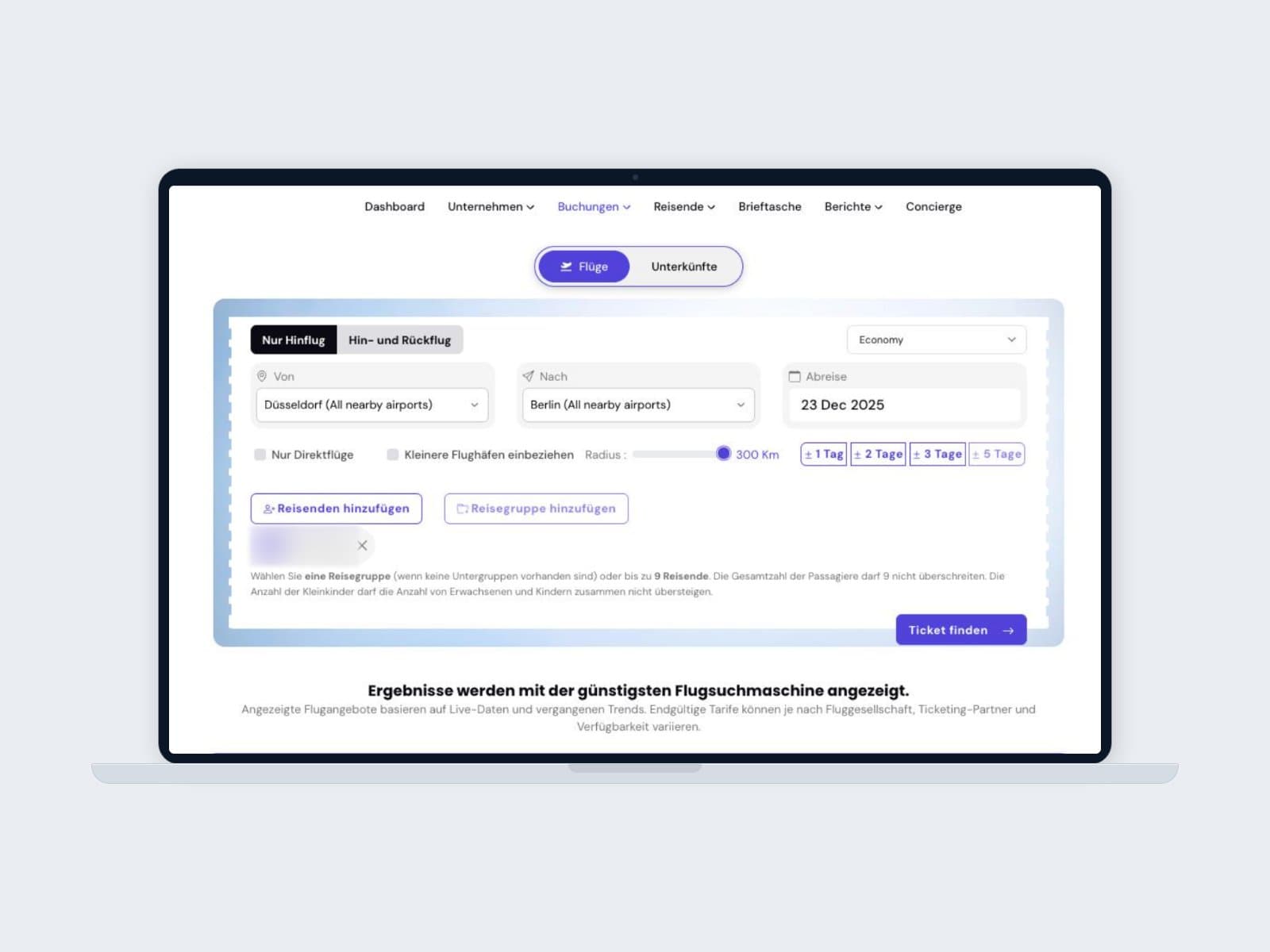
Enterprise platforms
Valhalla
A B2B platform where companies search, book and manage business flights and hotels centrally, within their own travel rules.
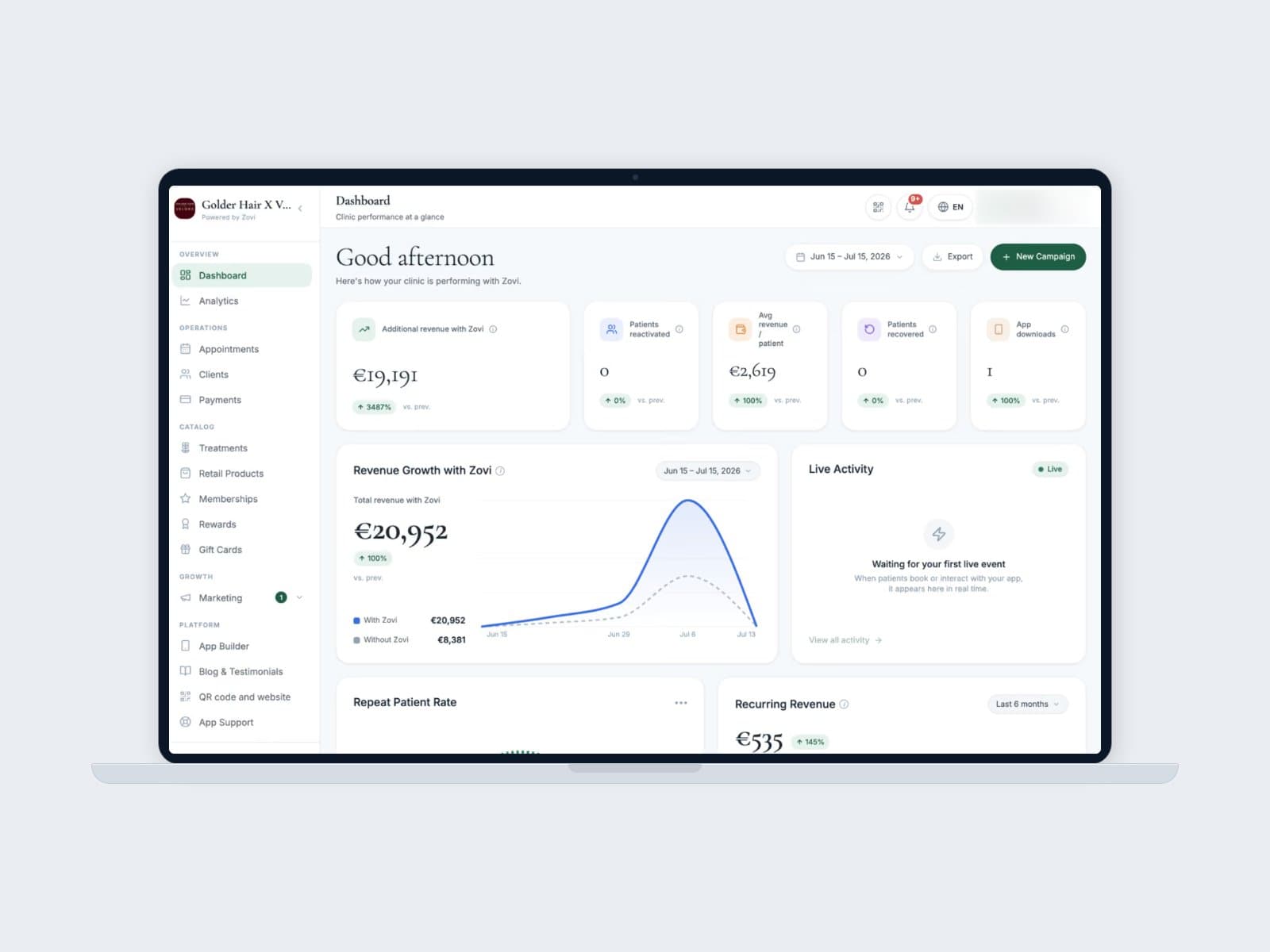
Clinic and workforce SaaS
Zovi OS
A white-label platform that lets aesthetic clinics run their own branded patient apps on one CRM engine.
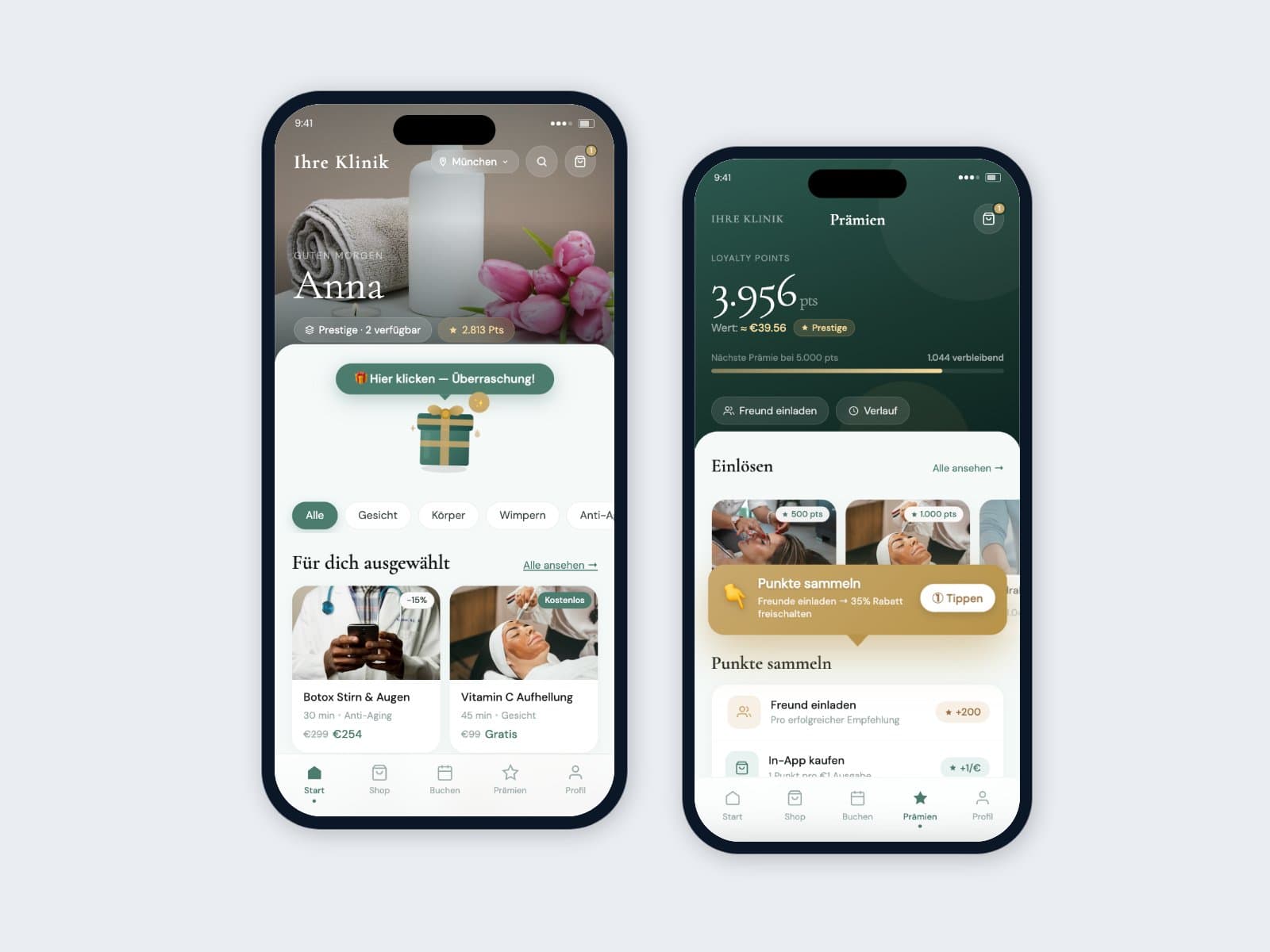
Clinic and workforce SaaS
Beauty Circle
The patient app for clinic rewards, memberships, booking and offers, connected to the clinic by invitation or QR code.
Want a system like this one?
From the first call to a system in production.
The people you meet in the audit are the people who build and run it.
- Book a free 30 minute call with Sam (opens Sam's calendar in a new tab)
Talk to Sam
Enquire about this project.
A free 30 minute call: what you want to build, how we would approach it and what a product like VIACTIV involved.
- Get your free estimate
Free estimate
Get your free estimate.
Pick a service, answer a few questions and get an indicative range with timeline and team.